
Helping people, strengthening teams, and building organizations through relationships
I have spent most of my career working with people, teams, organizations, and communities.
My professional path has included higher education, student development, nonprofit youth leadership, fundraising, workforce development, operations, sales, transportation, and organizational leadership. The roles have changed, but much of the work has stayed the same: building relationships, identifying needs, connecting people, and helping teams move forward.
That is why I founded Forged Team Solutions in 2022 in Heath Springs, South Carolina.
Forged brings those experiences together. I work with schools, colleges, businesses, nonprofits, leaders, and teams to strengthen people and culture, solve problems, and improve how organizations work. That can include communication, trust, accountability, decision-making, conflict resolution, staffing, development, and execution.
Why I care about people
My Christian faith shapes how I think about leadership and service.
For years, I knew how to look like the right kind of person. I was active in church, served, taught, prayed, and understood the language of faith. But over time, I came to understand that activity, performance, and the approval of others could not give me peace with God.
The change came when I stopped relying on what I could do and came to understand my need for Christ and His grace. That still shapes how I see people.
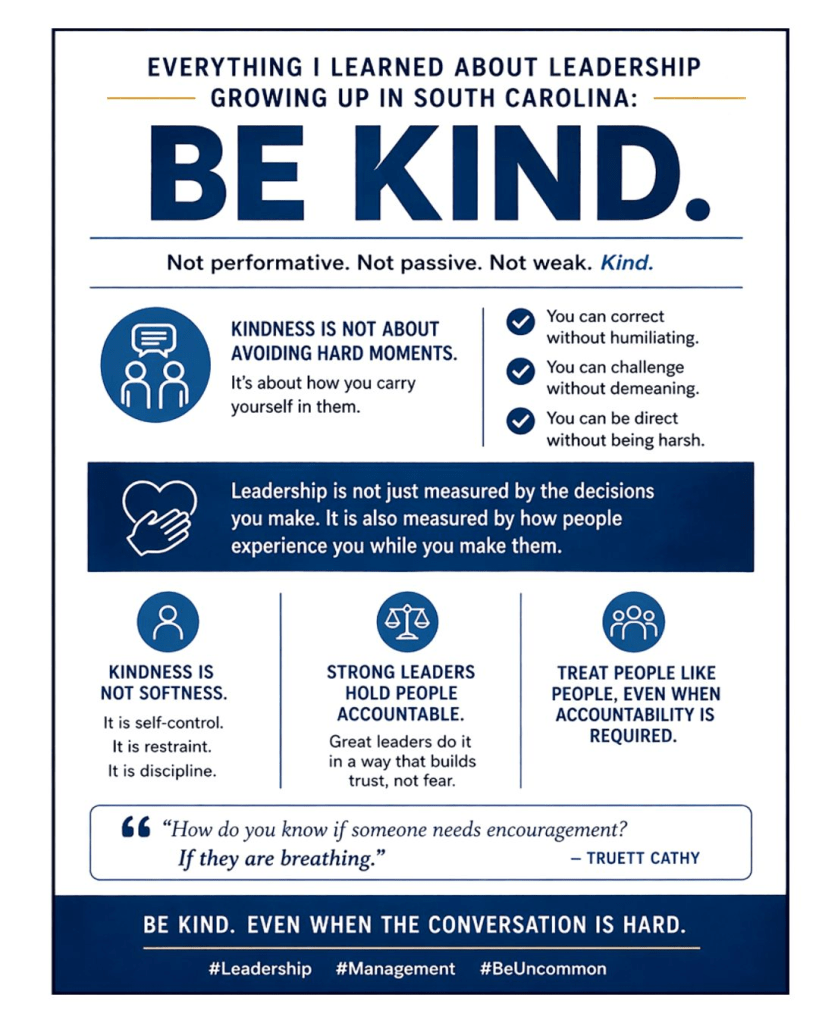
I do not believe people are problems to manage or resources to use. People have value. Grace matters. Relationships matter. Leadership should help people grow, recover from mistakes, develop their gifts, and find places where they can contribute.
I do not claim to lead perfectly. My faith reminds me that I need grace too. My testimony speaks to a desire to pursue faith, love, peace, and righteousness in a way that shapes how I live, lead, serve my family, and serve others. That has carried into my professional life.
Building bridges
In higher education, I saw how student engagement could become community engagement. One example was helping build a community-service program from an idea into an effort involving more than 300 students serving more than 20 nonprofit organizations. That work depended on relationships with nonprofit leaders, community organizations, coaches, advisors, and students.
Later, as a university executive, I oversaw Student Affairs, Facilities Management, Auxiliary Services, and Athletics. I worked with students, families, faculty, staff, alumni, churches, civic leaders, donors, businesses, the president, and the Board of Trustees.
With the Boy Scouts of America, I worked across multiple counties and 14 school districts, building relationships with educators, businesses, churches, civic leaders, donors, volunteers, and employers. I also helped connect young people with mentors, workplace exposure, career awareness, and workforce opportunities. Today, the setting is different, but the approach is much the same.
Through Forged Team Solutions and my consulting work, I work with leaders, schools, universities, athletic departments, businesses, operations teams, transportation leaders, coaches, and community organizations. Most conversations begin with a few simple questions:
What are you trying to accomplish?
What is getting in the way?
Who needs to be involved?
How can I help?
What I have learned
After years of leading teams, managing operations and budgets, developing staff, working with boards and executives, cultivating donors, building partnerships, recruiting volunteers, and solving operational problems, I have become convinced that organizations often struggle less from a lack of talent than from gaps in:
Communication. Trust. Clarity. Accountability. Execution.
Those are areas I enjoy helping people work through. Sometimes that means connecting people who should know one another. Sometimes it means helping a leader work through a hard conversation. Sometimes it means finding the right person for a role. Sometimes it means bringing structure to a process that has become unclear. Sometimes it means helping an organization find a transportation, workforce, operational, or business solution. And sometimes it means listening long enough to understand what the problem really is.
Why Forged Team Solutions
The name Forged is intentional.
Strong teams are not created just by putting talented people in the same room. They are formed through trust, pressure, accountability, shared purpose, leadership, and time.
The same is true of leaders. The same is true of organizations. And the same has been true in my own life.
My experiences – both good and difficult, personal and professional – have shaped how I lead. My faith has taught me that our value is not found in titles, recognition, or performance. My career has shown me what can happen when people are encouraged, connected, challenged, and given a chance to contribute.
That is what I want Forged Team Solutions to be about.
Helping people grow.
Helping teams become stronger.
Helping organizations work better.
Building relationships that create opportunity.
If that sounds like something your organization needs, I would welcome the conversation.
Corey A. Humphries
Founder & Owner
Forged Team Solutions
Heath Springs, South Carolina
 FORGED TEAM SOLUTIONS